How I replaced a two-hour daily Pain Depot ritual with a Cowork synthesis pipeline
Scale
Results
Every new project at Aampe used to start the same way: hunt across Slack, Gong, Pylon, Meet notes, and Linear for the last time someone said something true. The Pain Depot ritual surfaced signal — but synthesis still lived in my head and in scattered docs.
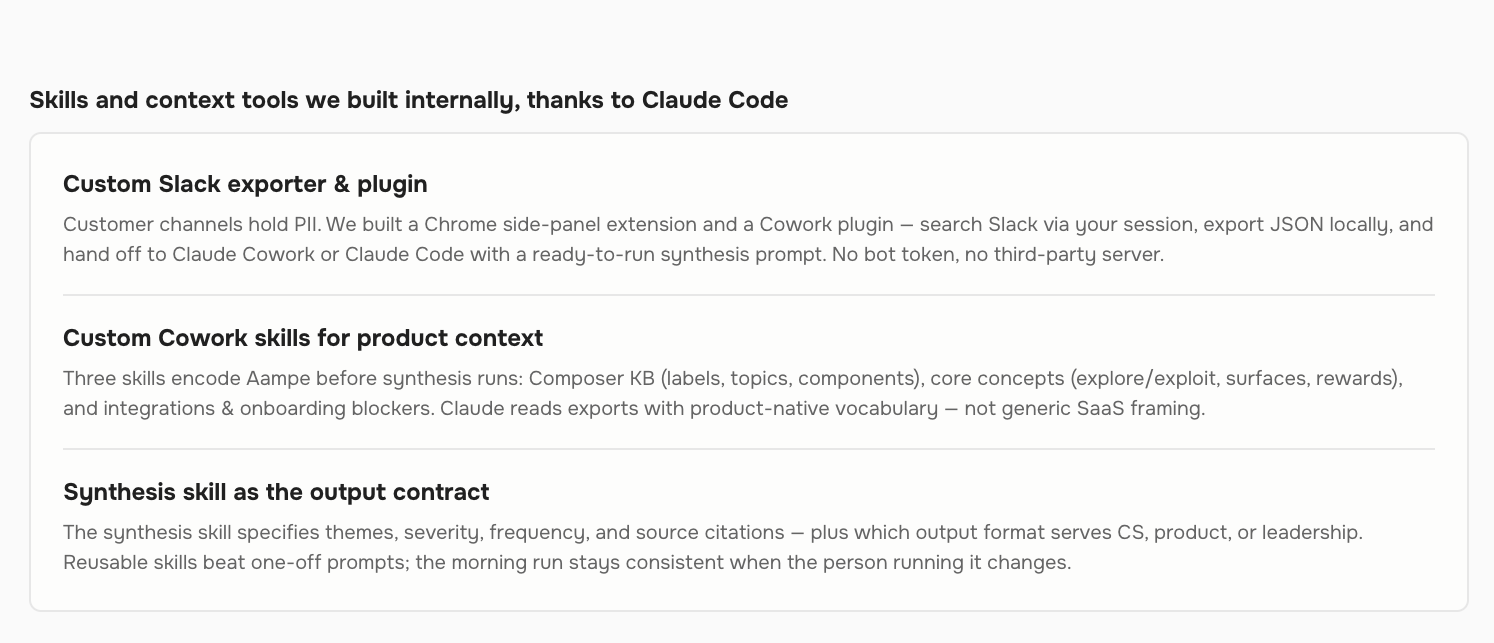
I built a pipeline instead: a Chrome extension that exports Slack via your own session to local JSON (no bot token, no third-party server), a shared notes repo so context compounds, and Claude Cowork skills that output KB articles citing every claim back to the source message.
What one run produces
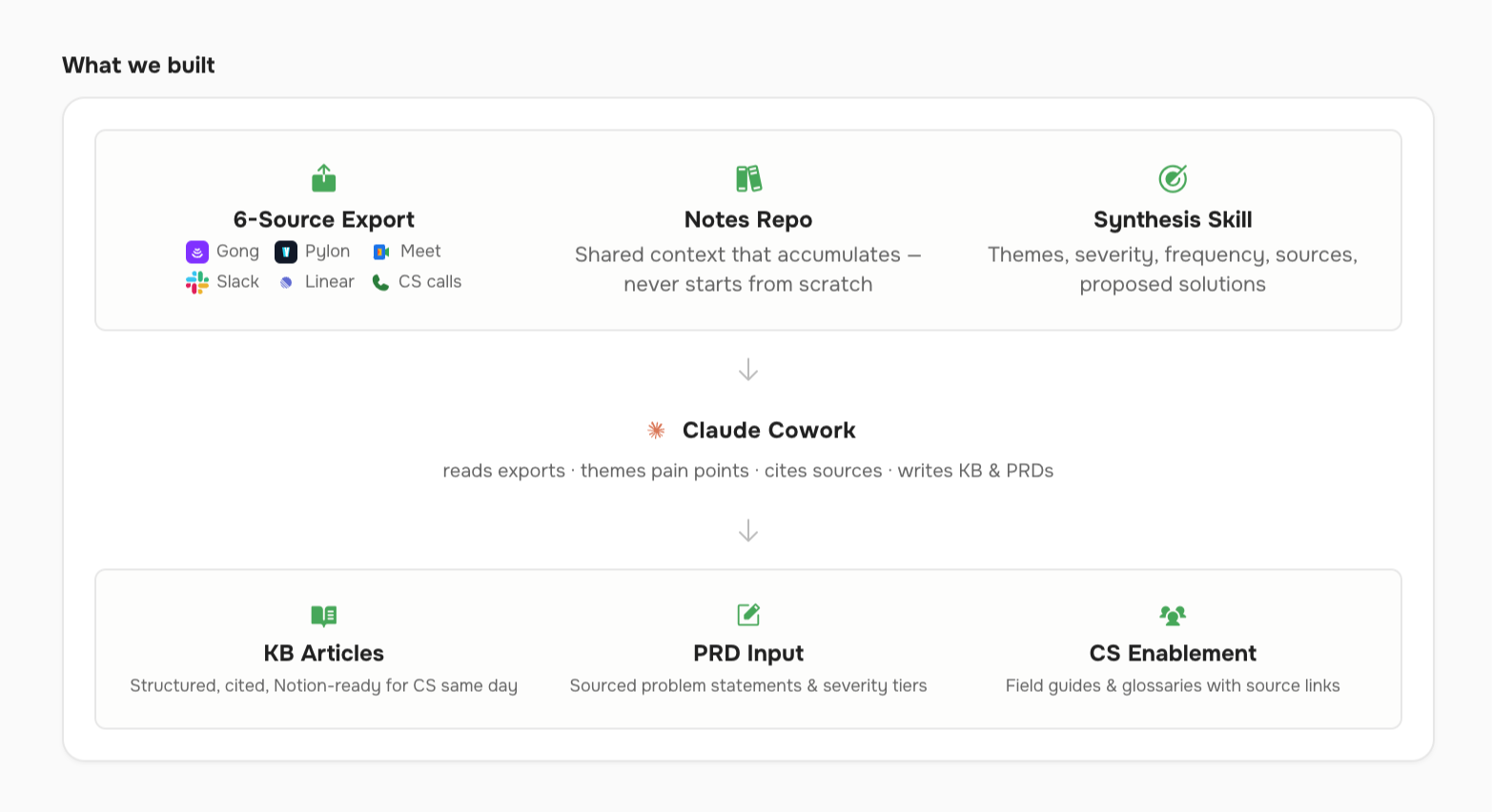
One Cowork run now produces three outputs from the same source set:
- PRD input — structured problem framing for design and product
- CS field guide — language Customer Success can use with customers
- Leadership summary — escalation-ready brief with linked sources
Every claim in a KB article links back to the source message. CS and leadership can verify synthesis instead of trusting a summary.
Architecture
Five source connectors feed a synthesis agent:
- Slack export (Chrome extension, local JSON)
- Gong call summaries
- Pylon support threads
- Meet notes
- Linear issues
The agent clusters themes, resolves duplicates, and writes to the shared notes repo. Cowork skills read accumulated context on the next run instead of starting from zero every morning.
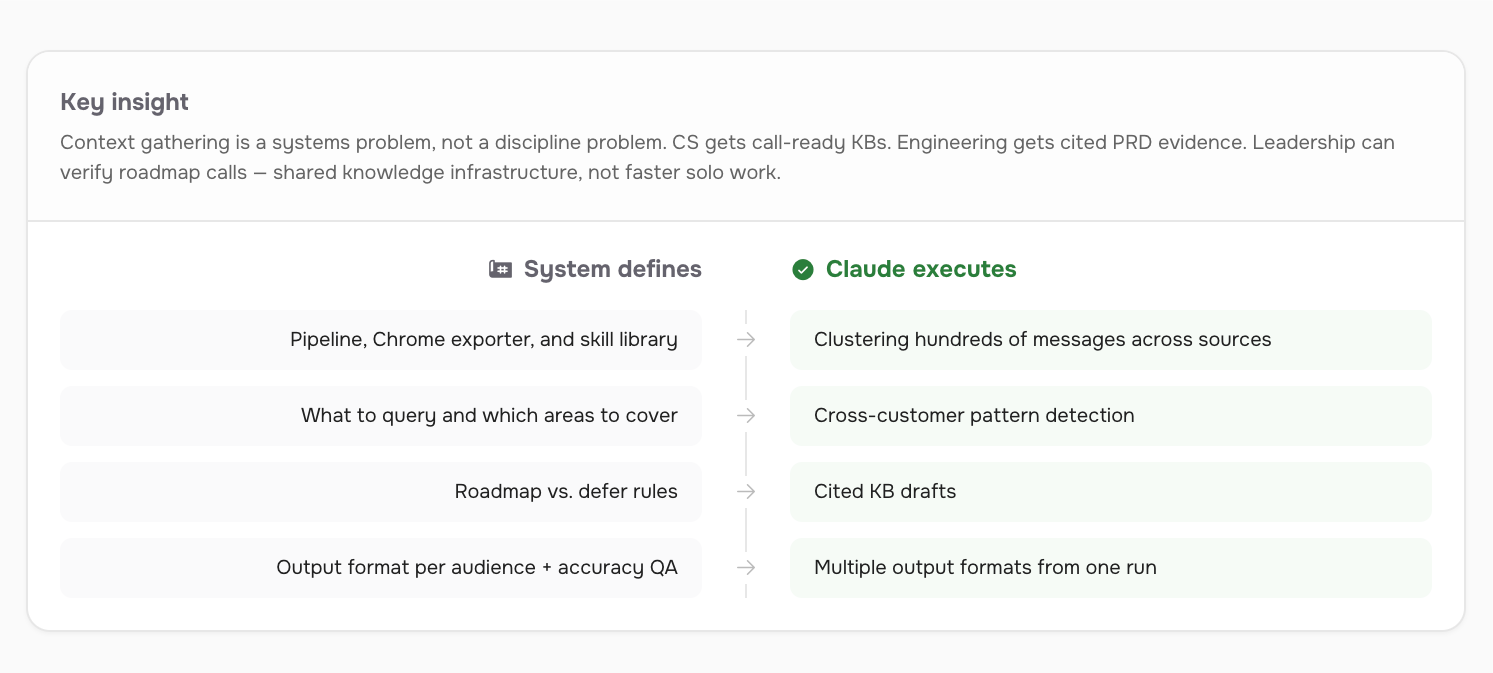
Automate synthesis, not judgment
AI handles reading, clustering, sourcing, and formatting. Deciding what to escalate stays human. The pipeline saves hours of combing — it does not replace product judgment.
TLDR; 3 Learnings
Automate synthesis, not judgment
AI handles reading, clustering, sourcing, and formatting. Deciding what to escalate stays human.
Context compounds in a shared notes repo
Each export and synthesis run adds to a shared notes repo. Cowork skills read accumulated context instead of starting from zero every morning.
Source-cited outputs
Every claim in a KB article links back to the source message. CS and leadership can verify synthesis instead of trusting a summary.