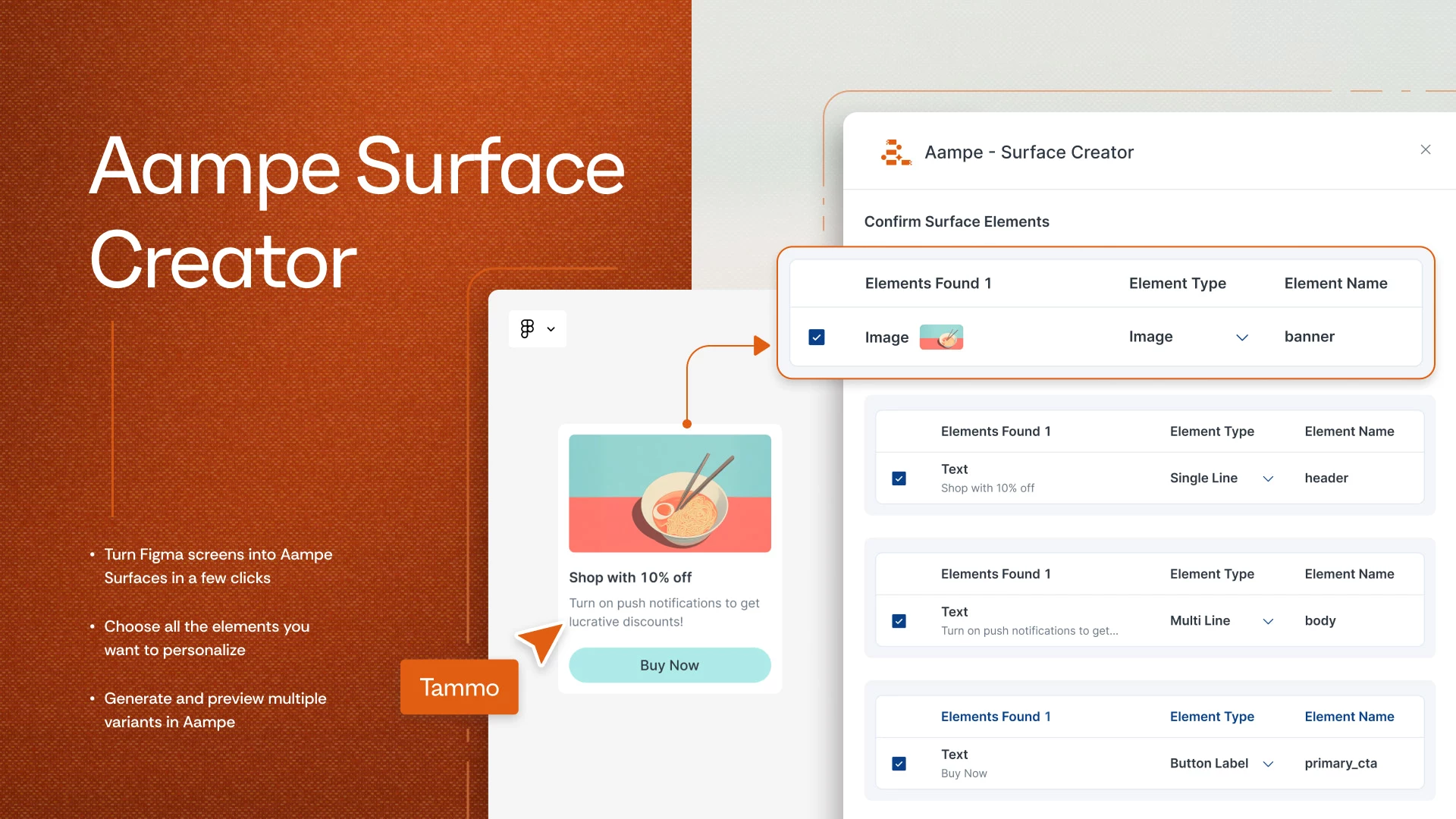
Label Buddy at Aampe, from idea to MVP in one week.
Built for and with
How it works
A fast design sprint with AI coding: two weeks from an ambiguous problem to a live prototype. Looms land async, and we check in once or twice a week.
01
A 30-minute call
Pick the problem
We pick one problem: onboarding, activation, getting more people to use what you've built, finding the real problem, interaction or visual design. Or I audit what you have. Then you book the sprint for it.
02
Sprint week 1
Week 1 · Clarity
I turn the ambiguous problem into one clear direction and a first prototype, built with Cursor or Claude Code on my side, so your team keeps shipping.
03
Sprint week 2
Week 2 · Prototype
The prototype gets real: the flows, the interaction and the visual design, working in a browser. You see each step in a Loom and steer it in our check-ins.
04
End of week 2
Handover
I move the code into your repo and walk you through it in a Loom. You own all of it, and you decide what to build next.
A typical two-week sprint
Here is how a typical sprint runs, day by day. A call starts each week, Looms keep you in the loop between calls, and every Friday ends with something you can click.
Map the problemFirst prototypeFlows, interaction and visual designHandover
Looms to you
Loom updateDemo LoomLoom updateFinal Loom
By Friday
One clear direction and a first prototype you can click.
A working prototype, and the code in your repo with a Loom walkthrough.
Week 1Clarity
MonKickoff call
Mon–TueMap the problem
Wed–FriFirst prototype
WedLoom update
ThuOptional call
FriDemo Loom
By FridayOne clear direction and a first prototype you can click.
Week 2Prototype
MonCheck-in call
Mon–ThuFlows, interaction and visual design
WedLoom update
ThuOptional call
FriHandover
FriFinal Loom
By FridayA working prototype, and the code in your repo with a Loom walkthrough.
Your time each week One call, sometimes two, and Looms you watch when it suits you.
See an existing example
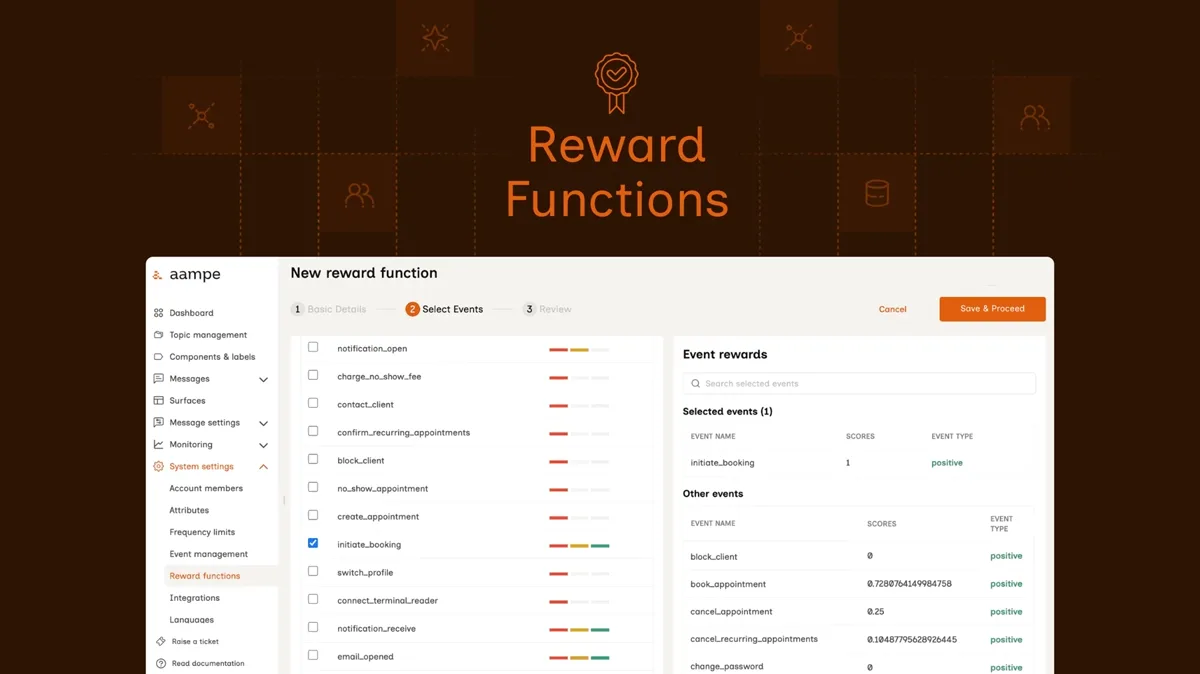
Label Buddy at Aampe: idea to MVP in one week
A real sprint from my time at Aampe, day by day. Mohana proved the idea by hand in onboarding. I turned it into a product in five days, built in Replit with Claude Code.
Mon
The idea
QA meant a week of matching 100k copy lines to their labels by hand.
Tue
The policy
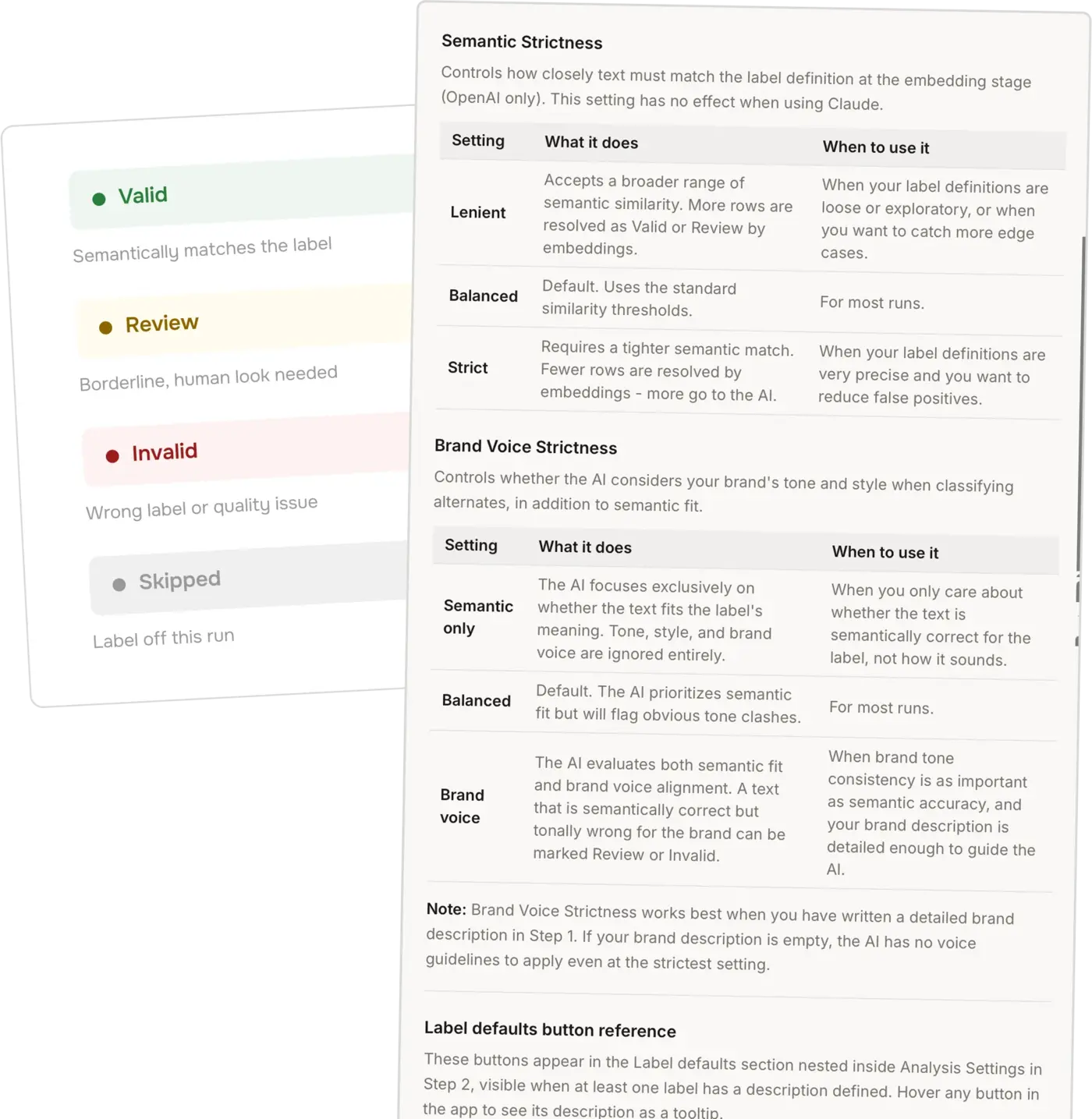
What counts as valid, written as a plain-language file the team can tune.
Wed
The queue
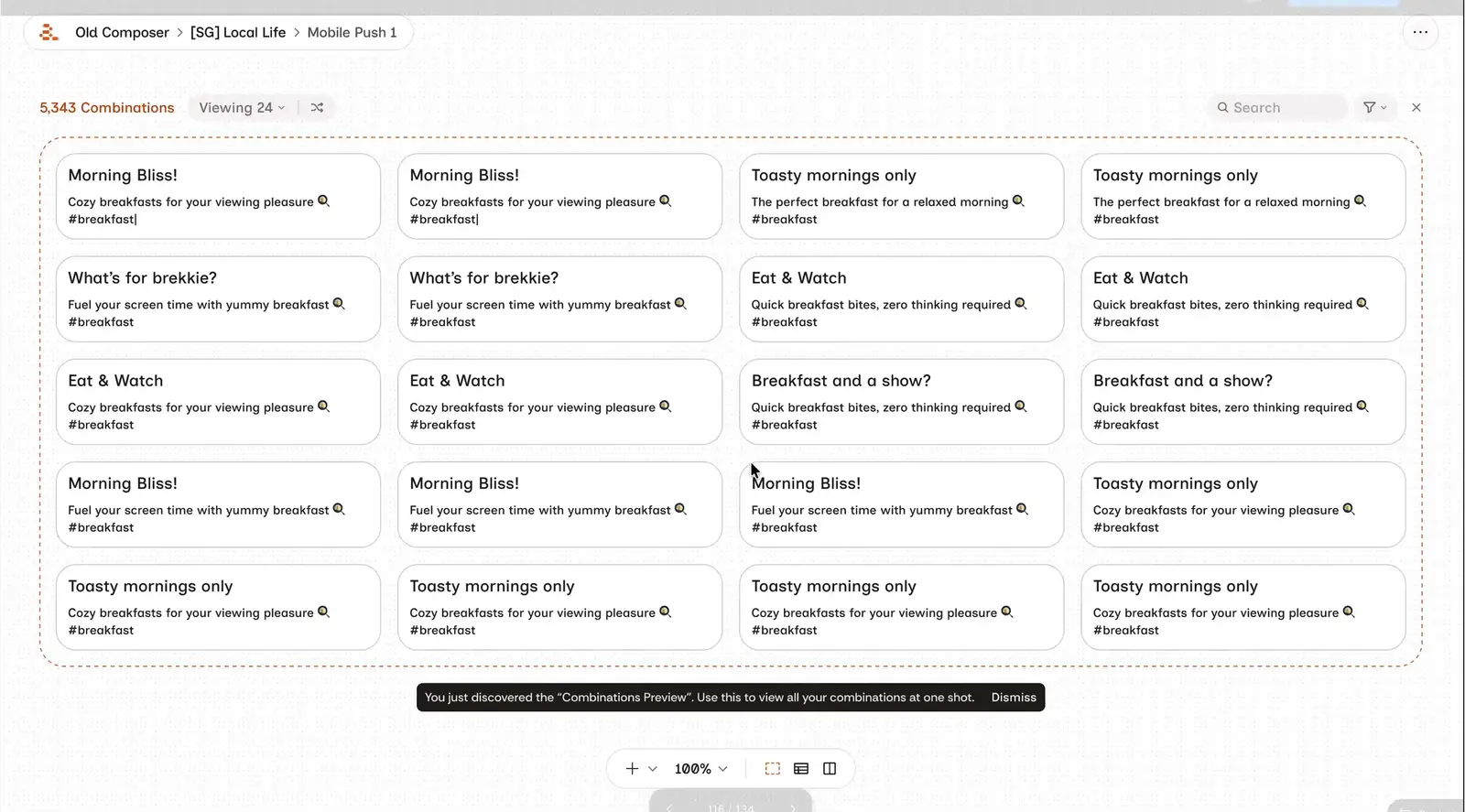
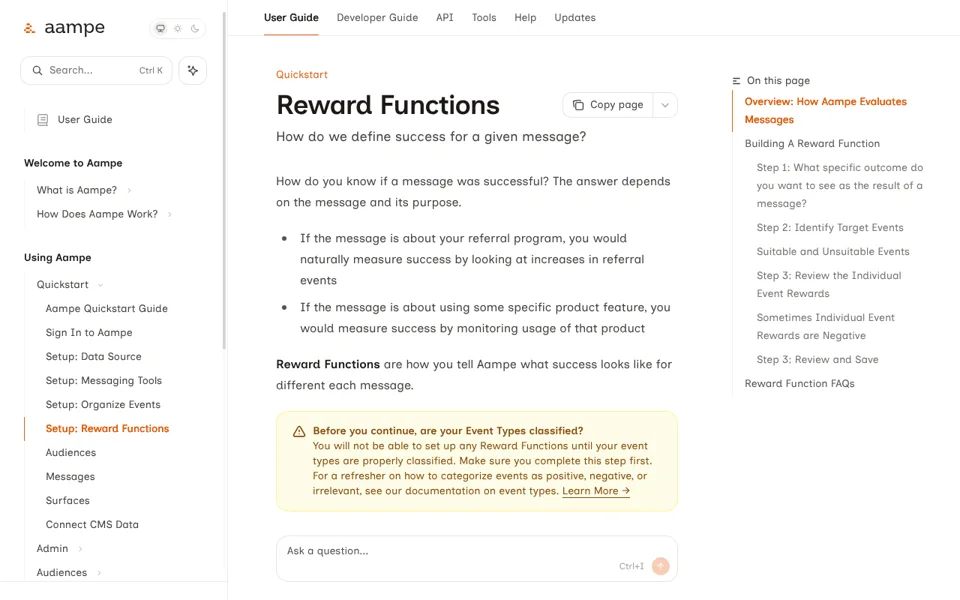
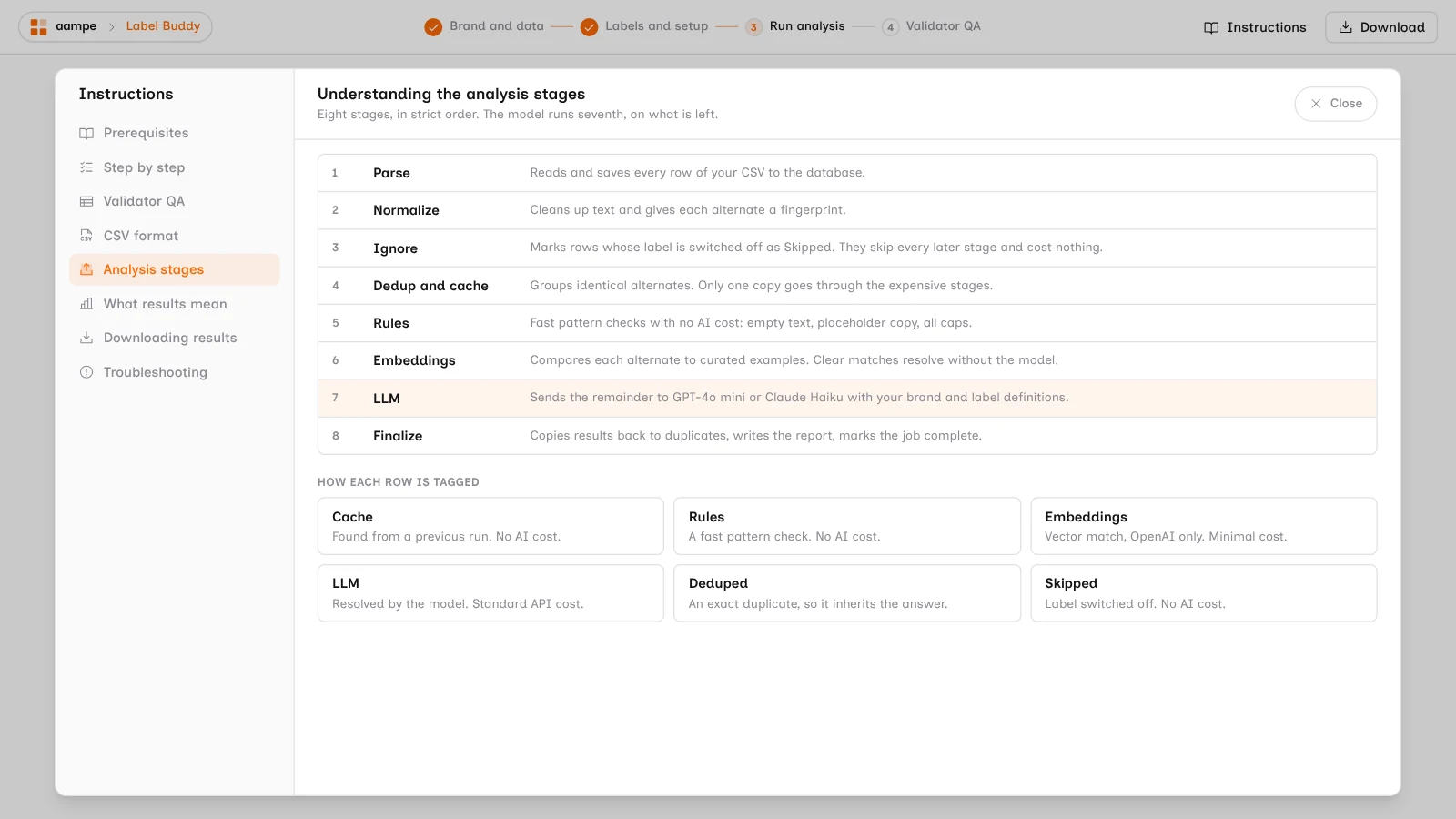
An eight-stage pipeline where the AI runs sixth. Only what it can't settle reaches a person.
Thu
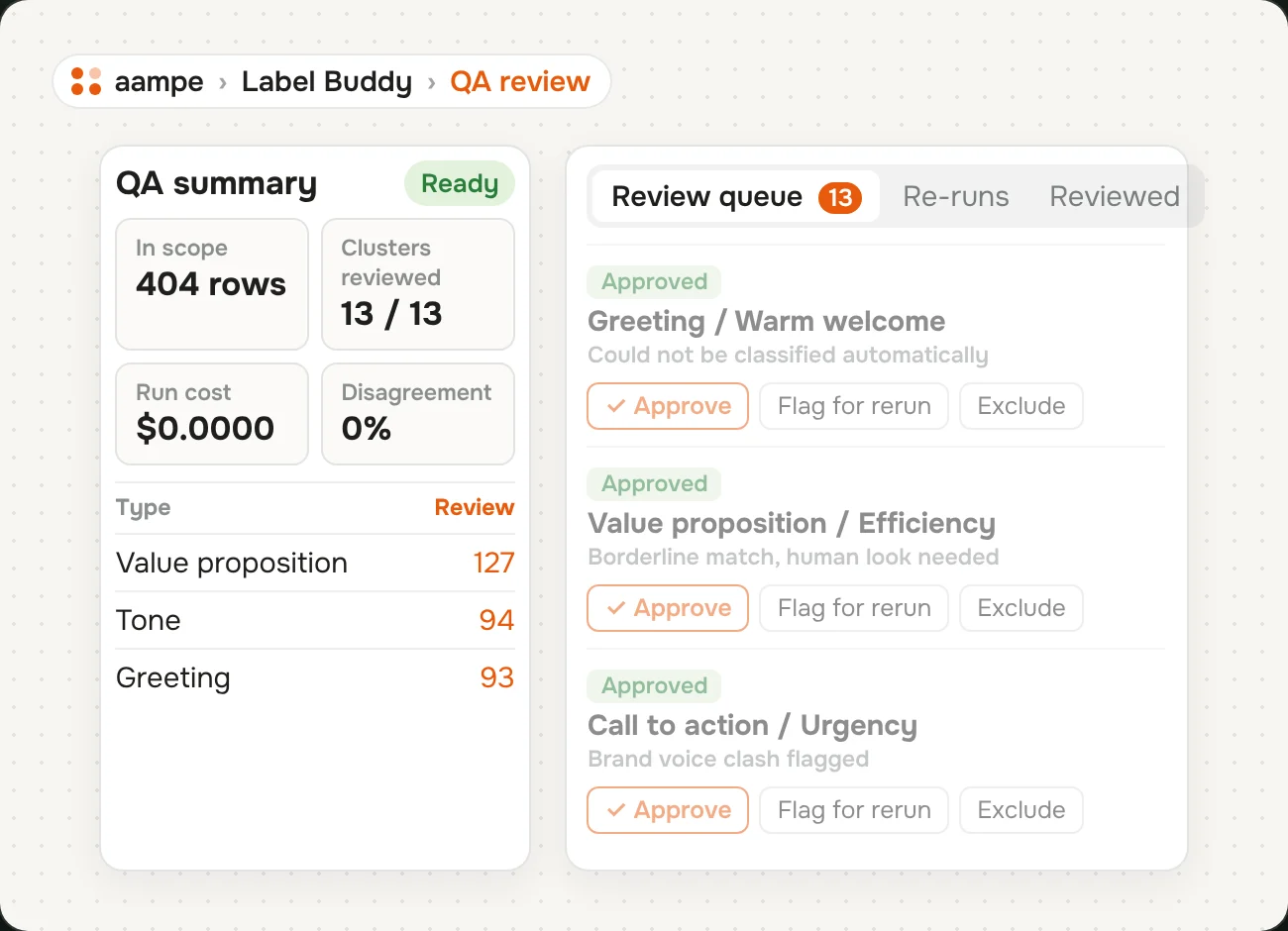
The review
Approve, rerun or exclude, cluster by cluster.
Fri
Shipped
A report CS can send to the customer.
Tue · The policy, in plain languageThu · The QA review, cluster by cluster
1 weekidea to MVP15revisions in that week40 hours to 1of QA a month per CS member
Madhuri is excellent at brainstorming and exploration. She generates strong ideas quickly, challenges the status quo, and her design work is beautiful, polished and consistently high craft.
SSami AbboudCTO & Co-Founder, Aampe
Not only did they nail the project, they also suggested and implemented different improvements that we hadn't even thought of.
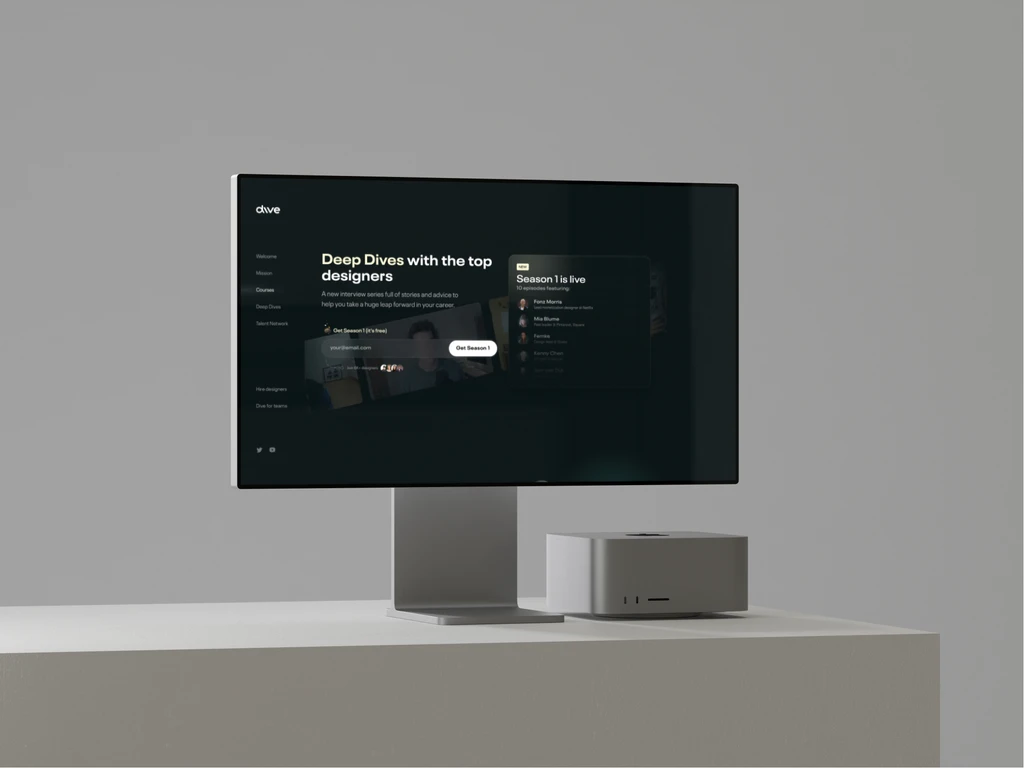
RiddFounder, Dive
Madhuri has successfully helped the client launch on time. She always had an answer ready with a great example, which shows how good her knowledge is.
AAroa Gil BoFramer, on an enterprise customer launch
Great vision, user insight, execution, and knowledge of cutting edge tools, to help us not only create the best site possible, but also maintain it ourselves.
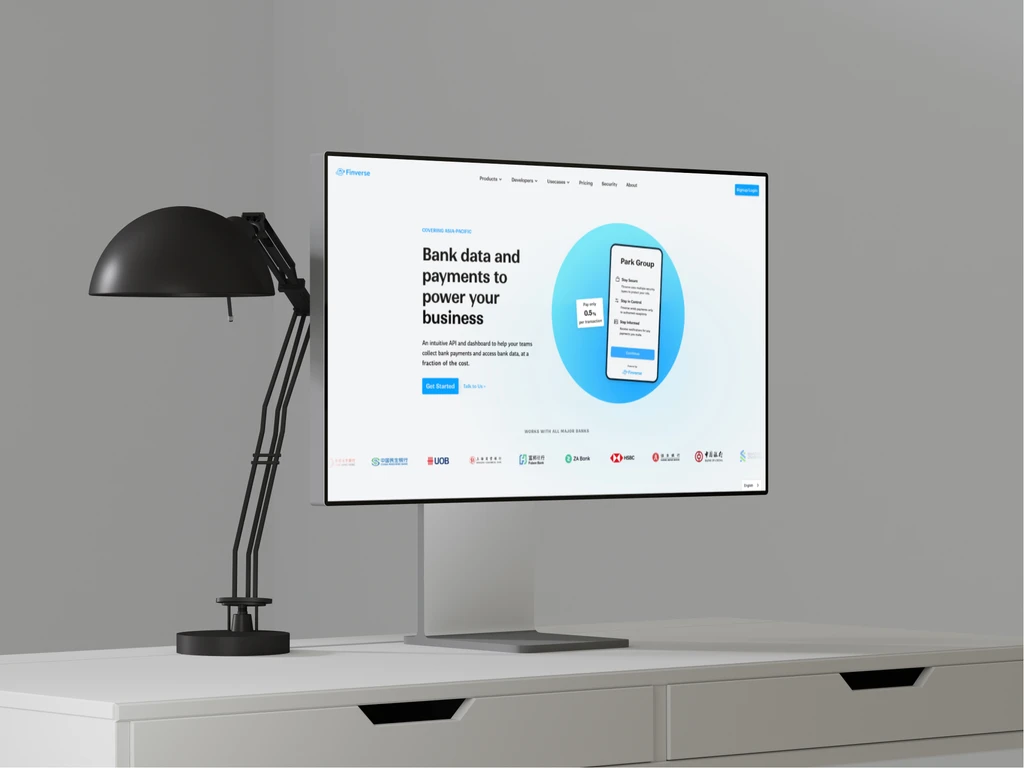
Priya SuryaHead of Growth, Finverse
I frankly don't know how Madhuri does it. She has an incredible vision for what the product could be, and is both excellent at leading a team to execute that vision AND getting in the trenches herself.
EEleanor HannaSenior Data Scientist, Aampe
She brought real process and discipline to our product and design teams… in a way that created momentum instead of bureaucracy.
LLogan LeBouefMarketing Leader, Aampe
She brings together exceptional product instincts, strong design judgement, natural creativity, and the ability to lead teams and projects with clarity and confidence.
KKalyan Kola CahillForward Deployed Engineer, Aampe
She speaks through artefacts. Rapidly prototyped, iterated work that cuts through ambiguity and gets everyone on the same page effortlessly.
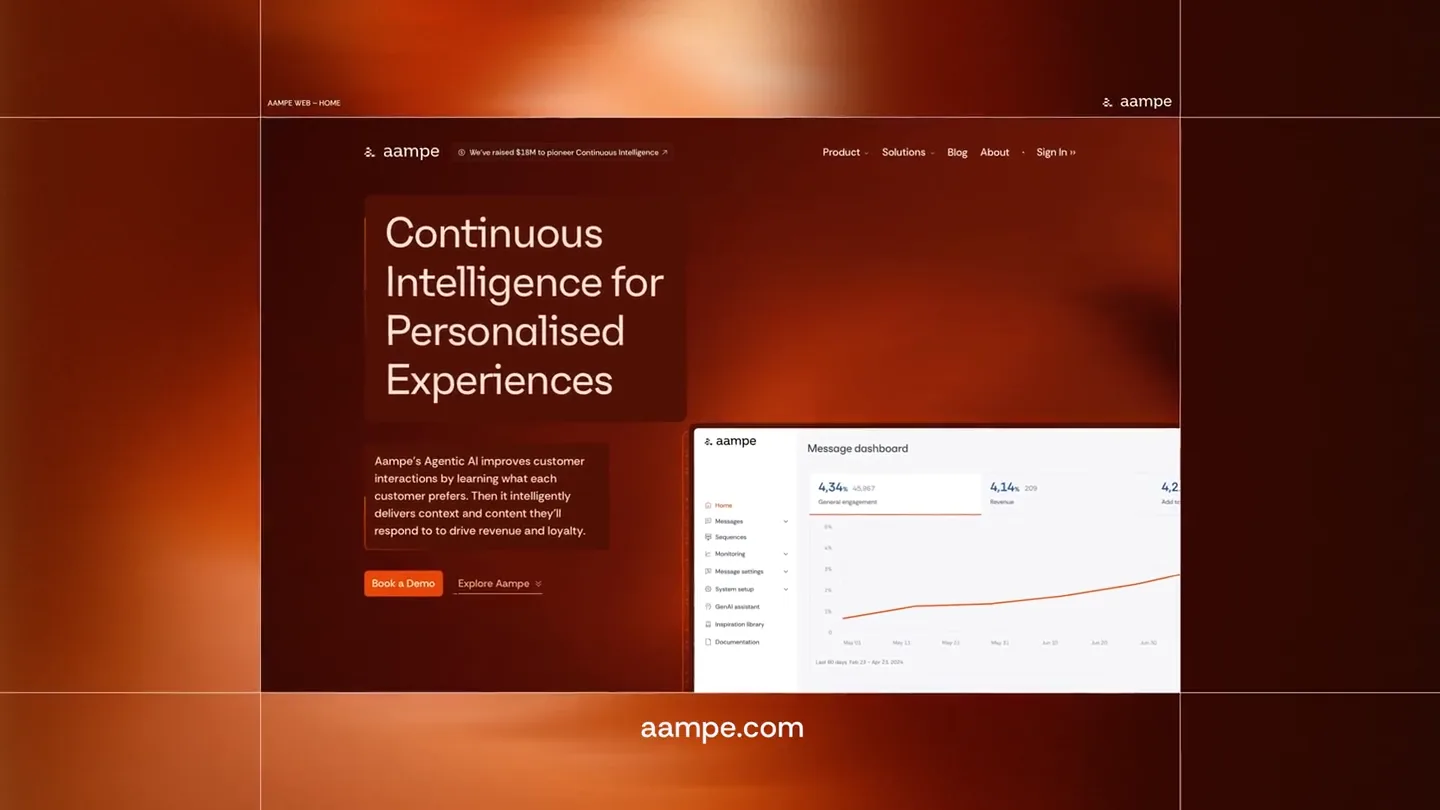
In seven months, Madhuri and the design group have deeply transformed Aampe's aesthetics and helped make Design part of Aampe's DNA. Continuous elegant and brilliant design support!
PPaul MeinshausenCEO, Aampe
What sets Madhuri apart is her ability to bridge the gap between customers, product, and design. Any team would be fortunate to have her.
A live prototype, built with Cursor or Claude Code
Async Looms, and a check-in once or twice a week
The prototype and its code, to keep testing or hand to your developer
Add-on
A launch video from the real build, priced on what you want to ship.
Why two weeks
At Aampe I built tools straight from one customer's problem, next to a forward-deployed engineer. Two weeks is long enough to ship something real and short enough that you never lose a month. And it's just me, so nothing gets lost in a handoff.
Questions
How do you work with my team?
I work on your problem like someone on your team: I make the product and design calls with you, then build them. I build on my side so your team keeps shipping, and hand the code over at the end.
Do I need an existing product, or can we explore a new idea?
Either works: a live product, a link, a prototype or a fresh idea. What matters is a clear, specific scope. A vague problem spends the sprint on exploring, so we sharpen it on the call first.
What should I bring to the call?
Whatever you have: a link, a prototype, screenshots or a few notes on the idea. And the one problem you'd most like solved. If you're unsure which, we pick it together.
What do I get at the end?
The working prototype and its code, plus a Loom walkthrough. Keep testing it, or work with your developer to launch it.
Do you test with real users?
It depends on your product. If you have users, we can put the prototype in front of a few of them in week 2. We agree this on the call.
What if I want changes?
Reply to a Loom or bring it to a check-in. Between check-ins I make the calls, so the sprint stays on track.
What do you need from me?
Access to what you've built, a short brief, and the problem we picked on the call. The sprint starts when I have all three.
Can you pick up a product I've already vibe coded?
Yes, and most briefs start there. I read what exists, keep what works, and tell you what I'd rebuild and why before I touch it.
How much gets done in a sprint?
The sprint goes to the one problem we picked on the call, and I take it as far as two weeks allow. You get two weeks of senior work on what matters most, not a fixed list.
Do I own the work?
Yes, all of it. The code moves into your repo at the end of the sprint, with any video source files. I may show it on my site unless you'd rather I didn't.
Can I stop?
Yes. Each sprint covers one problem. Book another for the next one, or stop there.
Can you make the launch video too?
Yes, as a separate add-on, priced on what you want to ship. The recordings come straight from a build I already know.
I need an ongoing design partner.
Happy to discuss a longer engagement, shaped around what you need. We can go through those needs on the call. Ongoing work is priced separately.
Which time zone do you work in?
I work remotely and async by default. At Aampe I worked with teams in San Francisco and Singapore, so overlapping with your hours is routine.
My stack
Grouped by step. If your team uses something else, I'll work in yours.
PlanBriefs, priorities, the roadmap
Linear
Notion
Claude Cowork
DesignFlows, systems, high-fidelity screens
Figma
Framer
BuildWorking software, in your repo or a new one
Claude Code
Codex
Cursor
Replit
Lovable
MotionLaunch videos rendered from code
Remotion
Playwright
ffmpeg
Cuelume
ShipPreviews, hosting, releases
GitHub
Vercel
Cloudflare
No-codeFrom the Nocoloco years
Framer
WWebflow
GGlide
More work
The rest of my Aampe work. Each one opens the full story.